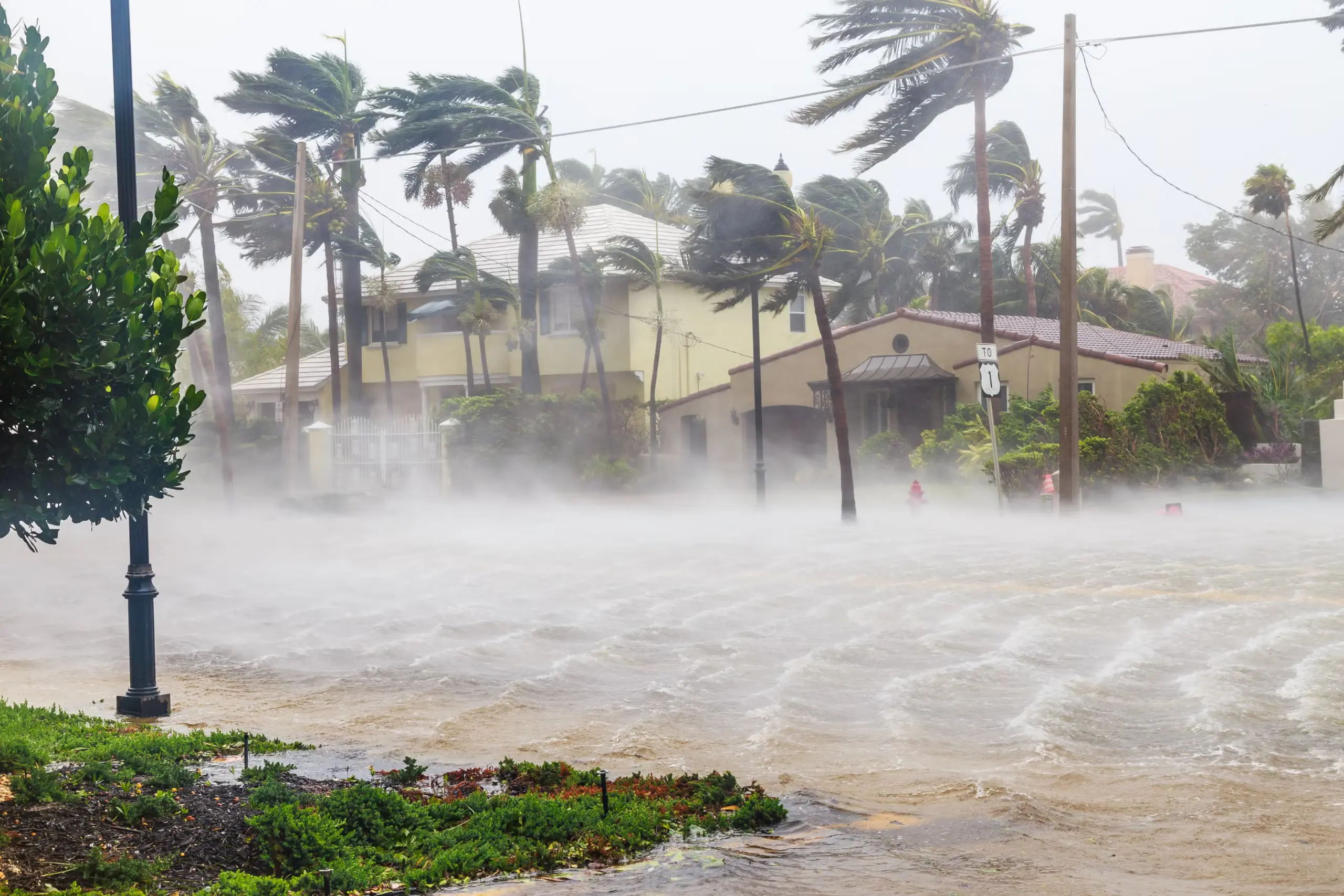
Every June, the same thing happens across South Florida. A storm enters the forecast, and suddenly every homeowner in Broward and Miami-Dade wants the same handful of small jobs done at once — a loose soffit refastened, a garage door braced, a sticking storm shutter fixed. By then it is too late to do any of it calmly. The homes that come through a hurricane in the best shape are the ones that were quietly prepared in the spring, before the first name was on the map.
This is a handyman's pre-season checklist — the practical repairs, inspections, and reinforcements that actually reduce damage to a South Florida home. It is not a survival-kit list; plenty of those exist. This is about the house itself: the openings, the roof line, the yard, and the small fixes that decide whether wind and water get in.
Start With Your Openings — Windows and Doors
In a hurricane, the danger is not only what the wind does to the outside of a house. It is what happens when the wind gets inside. When a window or door fails, wind enters and pressurizes the interior, and that internal pressure — pushing out while the wind pushes in — is what lifts roofs off and collapses walls. This is why South Florida building code focuses so heavily on opening protection, and why your windows and doors are the first thing to check.
Walk the whole house and inventory every window and exterior door. For each one, you either have impact-rated glass, approved shutters, or nothing. If the answer is "nothing" anywhere, that opening is your priority.
- Test every shutter before the season. Accordion and roll-down shutters seize, jam, and lose hardware sitting unused all winter. A handyman can free up a stuck track, replace missing wing nuts and bolts, and confirm panels actually close — a far better discovery in May than during a warning.
- Locate and label your panel shutters. If you use removable metal or polycarbonate panels, find them now, confirm the set is complete, and label which panel fits which opening. Pre-drilling or checking the anchor holes in the spring saves a frantic afternoon later.
- Re-seal around window and door frames. Cracked, dried-out caulk around frames lets wind-driven rain in even when the glass holds. Fresh exterior sealant around every frame is cheap insurance against water intrusion.
- Check that exterior doors latch and seal fully. A door that does not seat properly is a weak point. Worn weatherstripping, a loose strike plate, or a sagging hinge should all be corrected before season.
The Garage Door — The Most Overlooked Weak Point
If there is one part of a South Florida home that deserves attention before hurricane season, it is the garage door. A standard, un-reinforced garage door is one of the most common failure points in a hurricane. It is a large, flat surface taking the full force of the wind, and if it buckles inward, the storm is now inside the largest opening in your house — pressurizing everything and putting the roof at risk.
If your garage door is not hurricane-rated, you have three realistic options, in order of strength: replace it with an impact-rated door, install a code-approved bracing system, or at minimum have the existing door's track, rollers, and hinges checked and tightened so it is as sound as it can be. A handyman can inspect the door, reinforce the hardware, and tell you honestly whether bracing or replacement is the right call for your home.
The Roof Line, Fascia, and Soffits
Your roof is the home's first line of defense, and in the High Velocity Hurricane Zone — which covers all of Broward and Miami-Dade — even a small roofing weakness can become a major claim. A full roof inspection belongs to a licensed roofer, and every South Florida home should have one before June 1, ideally every year. But there is real pre-season work at the roof line that falls squarely in handyman territory:
- Refasten loose fascia and soffit panels. Soffits are a known wind entry point. When wind gets up under a loose soffit panel, it pushes into the attic and lifts from inside. Loose or rattling panels should be re-secured well before season.
- Re-secure lifted shingles or tiles. A handful of loose shingles or a slipped tile is exactly where wind starts peeling a roof. Catching and re-securing them early stops a small problem from becoming a structural one.
- Seal around vents, flashing, and penetrations. Dried-out sealant around roof vents and flashing is a common, quiet source of water intrusion in heavy rain.
- Secure loose attic vents and gable vents. These are small openings that, left loose, become wind and water paths into the attic.
Keeping Water Out — Gutters and Drainage
A hurricane is not only a wind event. South Florida storms drop enormous volumes of rain in a short time, and water that cannot drain away from the house finds its way in. Pre-season drainage work is unglamorous and genuinely effective.
- Clear gutters and downspouts. Clogged gutters overflow against the wall and foundation during exactly the rain event you least want that happening. Clear them and confirm water actually flows through.
- Extend downspouts away from the foundation. Downspouts that dump water right at the base of the house should discharge several feet out, so heavy rain drains away rather than pooling.
- Check the grade around the home. Soil that slopes toward the house channels water at the foundation. Low spots near the wall are worth correcting.
- Re-seal exterior wall penetrations. Gaps around hose bibs, cable and electrical entries, and vents are small water paths. Fresh sealant closes them.
The Yard and Exterior
In high wind, anything loose outside becomes a projectile — and a projectile is what breaks the window you spent money protecting. The yard is one of the simplest, highest-impact areas to handle before season.
- Book tree trimming early. Trim trees back from the roof line and remove dead or weak branches and palm fronds. Book this in early spring; arborists are fully scheduled across South Florida by late May.
- Plan where loose items go. Patio furniture, grills, planters, decorations — decide now what gets brought inside or into the garage when a storm approaches, and make sure there is room for it.
- Secure or plan to remove fencing weak points. Loose fence panels and gates are both projectiles and a way for wind to channel against the house.
- Anchor or relocate sheds and lightweight structures. Confirm anything detached is properly anchored, or have a plan for it.
Power and Generator Readiness
Most South Florida homeowners use a portable generator after a storm. The dangerous part is not the generator itself — it is improvised wiring. If you run a generator, the safe setup is a properly installed transfer switch or interlock, so the generator can never back-feed the grid (a serious hazard to utility crews) and you are not running a tangle of extension cords through a partly open door.
- Have a transfer switch or interlock installed. This is electrical work for a licensed electrician, and it is far safer than extension-cord improvising. Set it up before season, not during an outage.
- Test the generator now. Start it, run it under load, and confirm it works while a store can still help you if it does not.
- Stage safe fuel storage. Store fuel properly and well away from living space, and refresh it within its usable life.
The My Safe Florida Home Grant — Real Money Toward Hardening
Many of the strongest hurricane upgrades — impact windows, impact doors, roof reinforcement — are expensive, and a lot of South Florida homeowners put them off for that reason. There is a state program specifically built to close that gap, and it is worth knowing about.
The My Safe Florida Home program, run by the Florida Department of Financial Services, offers eligible homeowners a free wind mitigation inspection and a matching grant of up to $10,000 toward approved hurricane improvements. The match is generous — the state contributes two dollars for every dollar the homeowner spends, so a $5,000 homeowner contribution can unlock a $15,000 total project. Eligibility generally centers on a site-built single-family primary residence with an insured value at or below $700,000, and the program prioritizes lower and moderate-income homeowners and those over 60, though the income thresholds are higher than many people assume.
Two things to know. First, the free wind mitigation inspection has value on its own: it produces the standard form Florida insurers use to apply wind-mitigation discounts, so even with no further work, submitting it to your carrier can lower your premium. Second, the grant funding is in high demand and application windows open in phases, so the practical advice is to get the inspection done and apply as soon as your window opens. Check the official site, MySafeFloridaHome.com, for current eligibility rules, funding status, and application windows — program details change between cycles.
Your Pre-Season Timeline
If the full list feels like a lot, here is the order that works:
- Early spring — Book tree trimming and schedule the licensed roof inspection. These are the two things that book out, so they go first.
- Spring — Handle the structural handyman work: garage door, soffits and fascia, shutter testing and repair, re-caulking windows and doors, roof-line fixes.
- Spring — Address drainage: gutters, downspouts, grade, exterior penetrations. Have the generator transfer switch installed if you use a generator.
- Before June 1 — Review insurance, confirm flood coverage, schedule the My Safe Florida Home inspection, and test the generator.
- When a storm is named — Now it is only the quick tasks: put up panels, bring in loose items, fill fuel and water. Everything hard was done months ago.
Two Hurricane Myths Worth Ignoring
"Crack the windows to equalize pressure." This is an old myth and it is genuinely dangerous. Open windows let wind and rain in and pressurize the home — the exact thing you are trying to prevent. Keep everything closed and protected.
"Tape an X on the glass." Tape does nothing to keep a window from breaking. At best it slightly changes how the glass shatters; it offers no real protection. The only real protection for glass is impact-rated windows, rated shutters, or properly installed panels.
Get Your Home Ready Before June 1
We handle the pre-season repairs that protect a South Florida home — garage door reinforcement, soffit and fascia, shutter repair, sealing, and drainage. Licensed, insured, and serving Fort Lauderdale, Miami, and all of South Florida.
(954) 805-8057Hurricane Prep FAQs — South Florida
Hurricane season runs June 1 through November 30, so home repairs and inspections should be done before June 1. Starting in the spring is ideal because contractors still have availability and you can make decisions without the pressure of an approaching storm. Tree trimming in particular should be booked early, since arborists are fully booked across South Florida by late May.
A standard, un-reinforced garage door is one of the most common failure points during a hurricane. It is a large surface, and if it buckles, wind enters and pressurizes the home, which can lift the roof and push out walls. Reinforcing or replacing the garage door is one of the highest-value pre-season projects in South Florida.
Permanently installed hurricane shutters and impact windows generally require a permit in Broward and Miami-Dade because they are an attached structural modification in the High Velocity Hurricane Zone. Temporary panels you store and put up each season usually do not. A licensed contractor confirms what your specific installation requires and pulls the permit.
My Safe Florida Home is a state program that provides eligible homeowners a free wind mitigation inspection and a matching grant of up to $10,000 toward approved hurricane improvements such as impact windows, impact doors, and roof reinforcement. The grant matches two state dollars for every homeowner dollar. Eligibility generally requires a site-built single-family primary residence with an insured value of $700,000 or less. Check MySafeFloridaHome.com for current eligibility and application windows.
Plywood is a last-resort option, not a real substitute for impact windows or rated shutters. To offer any protection it must be exterior-grade, at least 5/8 inch thick, cut to overlap the opening, and anchored with proper fasteners into the frame, not just tacked on. It will not meet code as permanent protection and is far weaker than rated shutters, but installed correctly it is better than an unprotected window.
Have a licensed roofer inspect the roof before June 1, ideally every year. Between professional inspections, a handyman can address smaller issues that lead to wind and water damage: re-securing loose or lifted shingles and tiles, sealing around vents and flashing, refastening loose fascia and soffit panels, and clearing gutters and downspouts so heavy rain drains away from the home.
Florida has made many hurricane preparedness items sales-tax exempt year-round, including batteries, flashlights, tarps, portable generators under a certain wattage, coolers, and other supplies. Because the specific list and thresholds can change, confirm current details with the Florida Department of Revenue before a large purchase.
No. Cracking windows open during a hurricane is an old myth and it is dangerous. Open windows let wind and rain inside and pressurize the home, which increases the risk of roof and wall failure. Keep every window and door closed and protected with impact glass, shutters, or properly installed panels.
Hurricane prep done right is mostly quiet, unglamorous work handled months before anyone is watching the tropics. Protect your openings, reinforce the garage door, tighten up the roof line, move water away from the house, and clear the yard — and when a storm finally does enter the forecast, the hard part is already finished. If you want the pre-season repairs handled before June 1, reach out for a free estimate.