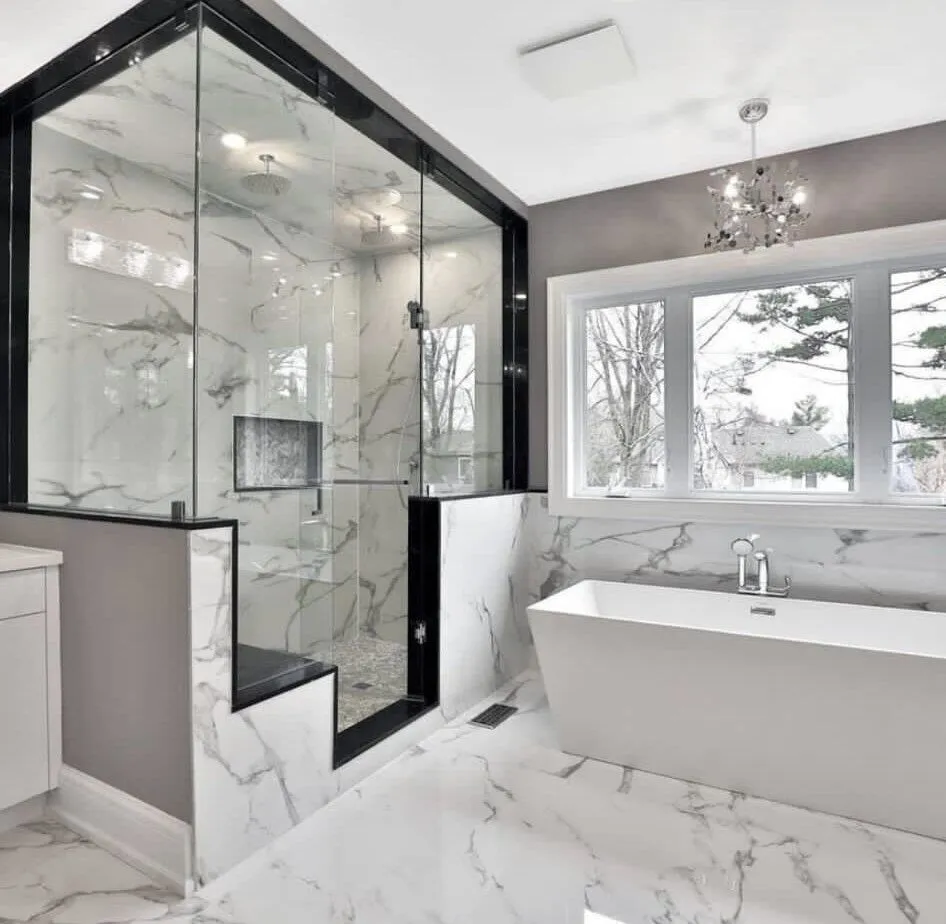
Bathroom remodels are the project we get called back on most — and not always for the right reasons. Miami's humidity is brutal on shortcuts. Tiles pop loose. Grout grows mold. Drywall behind the shower turns to mush when someone used the wrong backer board. We have repaired a lot of bathroom renovations that another contractor did wrong the first time, and almost every one traced back to the same handful of mistakes. This guide exists so your bathroom does not become one of those calls.
Below is everything that actually matters when planning a bathroom renovation in Miami or Fort Lauderdale: how to scope the project, real 2026 costs, the tile and waterproofing decisions that decide whether the bathroom lasts, ventilation, permits, timelines, and the mistakes that quietly ruin South Florida bathrooms.
Start With the Scope — It Changes Everything
Before you pick out tile, you need to know which category your renovation falls into. The scope drives the budget, the timeline, and whether you need a permit. In Miami and Fort Lauderdale, bathroom projects fall into three main tiers.
Cosmetic Refresh ($6,000 – $14,000)
New vanity, new faucet, new light fixture, fresh paint, and possibly resurfaced or regrouted tile. Everything stays in its existing location. Quick turnaround — typically three to five days. This is the right call when the bones of the bathroom are solid and you simply want it to look current.
Mid-Range Remodel ($18,000 – $35,000)
Full demo of the shower or tub surround, new tile floor to ceiling, new vanity, new toilet, new fixtures, and often a new shower pan or tub. This is what most Miami homeowners mean when they say "bathroom remodel." Plan on one to two weeks of active work. This tier is where material quality matters most, and where humidity-resistant choices are non-negotiable.
Full Gut and Reconfigure ($35,000 – $60,000+)
Moving the toilet, relocating the shower, removing a wall to expand the space, adding a double vanity, heated floors. This is a real construction project. Plumbing gets moved, permits are required from Miami-Dade or your city, and the timeline is three to five weeks at minimum once work begins.
What a Miami Bathroom Remodel Actually Costs in 2026
Bathroom remodel pricing in Miami rose noticeably over the past few years. The line-item table below reflects a typical mid-range remodel in the Miami market as of 2026. Treat these as planning ranges — the only accurate figure comes from an on-site estimate, because fixture selection, tile grade, and site conditions all move the total.
| Item | Cost Range | Notes |
|---|---|---|
| Demo & removal | $1,000 – $2,500 | Tile demo, dumpster, haul-away |
| Shower tile (material) | $3,000 – $7,000 | Porcelain mid-grade; labor extra |
| Floor tile (material) | $900 – $3,000 | Matches or complements shower |
| Tile labor | $4,500 – $9,000 | Miami market rate, 2026 |
| Vanity (incl. sink) | $700 – $4,000 | Stock to semi-custom |
| Toilet | $400 – $1,500 | Standard to comfort height |
| Shower fixtures | $500 – $3,000 | Rain heads and hand showers add cost |
| Plumbing labor | $1,000 – $3,000 | Fixture swaps; more if relocating |
| Waterproofing | $500 – $1,000 | Non-negotiable in Miami |
| Lighting & exhaust fan | $400 – $1,500 | Humidity-rated fixtures only |
One honest budgeting note: on older Miami homes, set aside a contingency of roughly 15 to 20 percent. Once tile and drywall come off, hidden conditions — corroded supply lines, old leaks, subfloor damage — frequently appear, and a contingency keeps a surprise from derailing the whole project.
Tile Selection for Miami Bathrooms: Don't Get This Wrong
This is where we see the most mistakes. Miami bathrooms need materials that handle constant humidity, steam, and the temperature difference between air conditioning and the outside heat. Here is what actually works.
- Porcelain tile — the best overall choice. Dense, very low water absorption, and stands up to humidity. Large-format tiles (24x24 or larger) are popular in Miami and look clean with minimal grout lines, which also means less grout to mold.
- Ceramic tile — acceptable in dry areas like floors, but not the first choice for shower walls, where porcelain wins.
- Natural stone (marble, travertine) — beautiful, and Miami loves it. But it needs proper sealing every one to two years in this climate. Keep it out of the wet area of the shower unless you are committed to that maintenance, and use it on floors and accent walls instead.
- Avoid laminate or wood-look products in wet areas — regardless of how "waterproof" the manufacturer claims they are. Miami humidity finds a way in. Stick with porcelain for shower and tub surrounds, always.
The Waterproofing Layer — What Most Contractors Skip
Behind every shower tile is either plain cement board or a true waterproofing membrane system. In a dry climate, cement board alone is often enough. In Miami, it is not. You need a full waterproofing membrane — a sheet system such as Schluter KERDI or a liquid-applied system such as RedGard, applied over the substrate and worked into every seam and corner before tile goes up.
This is the single step that separates a shower that lasts twenty-plus years from one with a hidden mold problem in five. The tile and grout are not the waterproofing — the membrane behind them is. When you are interviewing contractors, or reviewing a quote, ask the question directly: "What waterproofing system are you using in the shower?" If the answer is vague, keep looking. A contractor who waterproofs Miami showers properly will name the exact product without hesitation.
Ventilation and Humidity Control
Florida Building Code requires an exhaust fan in any bathroom without an operable window. But the code minimum is a floor, not a goal — and in Miami's humidity the minimum is not enough to keep a bathroom dry. Three things make a real difference:
- A fan rated for at least 110 CFM in a standard bathroom. The code minimum of roughly 50 to 80 CFM clears the room too slowly for this climate.
- A humidity-sensing fan that switches itself on and off based on moisture. It takes the human — who always forgets — out of the equation.
- The fan must be ducted directly to the exterior. Venting into the attic simply relocates the moisture into your insulation and framing, where it causes a worse and more expensive mold problem out of sight.
Ventilation is cheap relative to the rest of the project, and it protects every other dollar you spent on tile, fixtures, and finishes. It is one of the highest-value line items in the whole job.
Walk-In Shower or Tub? Planning the Layout
If your renovation touches the layout, the shower-versus-tub question is worth real thought. A curbless or low-curb walk-in shower suits most Miami homeowners — it looks modern, cleans easily, opens up a small bathroom visually, and supports aging in place. It has become the default request in mid-range and full remodels.
That said, keeping at least one bathtub somewhere in the home is generally smart for resale, especially in family neighborhoods where many buyers expect a tub. A common Miami solution is a walk-in shower in the primary bathroom and a tub retained in a secondary or guest bath. If you only have one bathroom, weigh the resale factor carefully before removing the tub entirely.
Permits and Timelines in Miami and Fort Lauderdale
Replacing a vanity, toilet, or shower fixtures in the same location generally does not require a permit in most Miami jurisdictions. But if you are moving a wall, relocating plumbing, adding electrical circuits, or changing the shower footprint, you need a permit — from Miami-Dade County or your city building department (City of Miami, Coral Gables, Hialeah, and others each run their own). Permit review commonly adds two to four weeks before work begins, so factor it into your timeline now, not mid-project.
A reputable contractor pulls permits on every job that requires one. If a contractor tells you "we do not need a permit for this" on a job that clearly does, that is a contractor to walk away from — an unpermitted bathroom can stall a future home sale and create liability for you, not them.
5 Mistakes That Ruin Miami Bathroom Renovations
- Skipping real shower waterproofing. Cement board alone is not waterproofing. Without a membrane system, Miami humidity reaches the framing and mold follows within a few years.
- Under-sizing the exhaust fan. A code-minimum fan, or one vented into the attic, leaves the room damp. Humidity that lingers after every shower is what feeds mold.
- Putting natural stone in the wet area. Unsealed marble or travertine inside the shower stains and harbors moisture in Miami. Save the stone for floors and accent walls.
- Skipping the permit on plumbing or electrical work. It saves a little time now and costs far more later when an inspector or a buyer's home inspection finds it.
- No contingency budget. Older Miami homes hide corroded pipes and past leaks behind the tile. Without a 15 to 20 percent contingency, the first surprise stalls the entire project.
Miami Bathroom Remodel — Get a Real Estimate
We serve Miami, Fort Lauderdale, and all of South Florida. Licensed, insured, and familiar with every jurisdiction's permit and hurricane-code requirements. Free estimates, no pressure.
(954) 805-8057Questions About Bathroom Remodels in Miami
As of 2026, a cosmetic bathroom refresh in Miami typically runs $6,000 to $14,000. A mid-range remodel with new tile, fixtures, vanity, and shower or tub work typically costs $18,000 to $35,000. A full gut and reconfigure with moved plumbing and walls usually runs $35,000 to $60,000 or more. Miami labor costs run roughly 10 to 20 percent above central Florida due to coastal labor rates and hurricane-code requirements.
Porcelain is the best choice for Miami bathrooms. It is dense, absorbs almost no water, and holds up to constant humidity and the temperature swing between air conditioning and Florida heat. Ceramic is acceptable on dry floors but porcelain is better for shower walls. Natural stone such as marble or travertine is fine on floors and accent walls if sealed every one to two years, but it is risky inside the wet area of a shower.
If you are only replacing fixtures, tile, or a vanity in the same location, a permit is generally not required. Moving plumbing, adding electrical circuits, or changing the shower or tub footprint requires a permit from Miami-Dade County or your city building department. Most Miami-Dade bathroom renovations that touch plumbing or electrical do require permits, which also protects resale value.
Miami's high humidity keeps surfaces damp long after a shower, which gives mold the moisture it needs. The two most common causes of bathroom mold in Miami are missing or inadequate shower waterproofing behind the tile and undersized or poorly vented exhaust fans. A proper waterproofing membrane and a strong, exterior-vented humidity-sensing fan prevent the large majority of bathroom mold problems.
A Miami shower needs a full waterproofing membrane system, not just cement board. Sheet membranes such as Schluter KERDI or liquid-applied membranes such as RedGard are applied over the substrate and seams before tile goes up. This continuous waterproof layer is the single step that separates a shower that lasts decades from one that develops hidden mold within a few years.
A cosmetic refresh typically takes three to five working days. A mid-range remodel with full tile and fixture replacement usually takes one to two weeks of active work. A full gut and reconfigure that moves plumbing and walls typically takes three to five weeks or more, and permit review can add two to four weeks before work even begins.
While code minimum is around 50 to 80 CFM, a standard Miami bathroom benefits from a fan rated for at least 110 CFM because of the humidity. A humidity-sensing fan that turns itself on and off is ideal, and the fan must be ducted directly to the exterior, never just into the attic, which simply moves the moisture problem somewhere worse.
It depends on the household and the home. A curbless or low-curb walk-in shower suits most Miami homeowners, looks modern, and is easier to clean and age in place with. However, keeping at least one bathtub in the home is generally smart for resale, especially in family neighborhoods, because many buyers expect a tub somewhere in the house.
A bathroom renovation in Miami done right comes down to a few non-negotiables: porcelain over the wet areas, a real waterproofing membrane behind the tile, a strong exterior-vented fan, the correct permits, and a contingency for what the old walls are hiding. Get those right and the bathroom looks good and stays dry for decades. For a straight answer on your specific bathroom, reach out for a free on-site estimate.